

Ramzan, for me, is 2 months of a laptop that never closes. At home, at the table, after sehri, after iftar, the screen is always on, and the numbers are always moving. We track cost per conversion the way some people track the score of a match. When a creative starts working, you feel it before you see it. When one dies, you pull it. The month has a rhythm and if you’re not pedantic enough to hear it, the noise will drown you.
This year, that rhythm produced something worth writing about.
Global website revenue grew +30% year over year. Paid media revenue doubled. Paid ROAS more than doubled.
Trust me, these aren’t rounding errors, they came from specific decisions made months before Ramzan started, and from a discipline of creative and channel strategy that got sharper every week. What follows is what I learned.
Start before everyone else wakes up
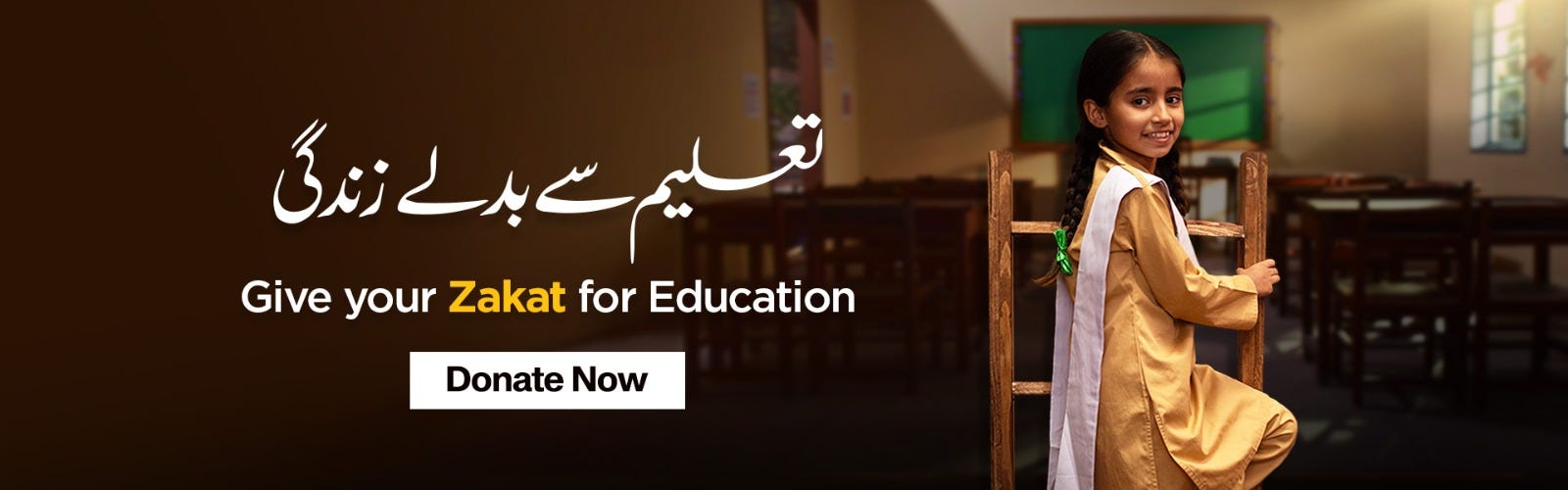
On the 1st of January, we changed our core messaging from “Educate a Girl” to “Give your Zakat for Education” while Ramzan was still 45 days away. No one else was talking about Zakat yet.
This gap was where the return lived.
By the time Ramzan began, we had already built genuine consideration with audiences who were actively thinking about where their Zakat would go. When the season peaked, we weren’t introducing ourselves, but we were closing. That early start generated roughly 16% of our total Zakat website revenue before Ramzan even started, through paid channels alone.
The lesson isn’t complicated: Ramzan is a compressed, high-competition window where every major charity, every mosque appeal, every WhatsApp forward competes for the same attention in the same 30 days. The solution is to simply not be in that race but to build your case before the crowd shows up.
Why do people trust institutions with their Zakat?
This question kept me up more than the late-night numbers did.
Zakat is not a casual donation. It is an obligation, a precise calculation, a deeply personal religious act motivated by obligation. When someone gives Zakat to an institution, they are trusting that the institution will handle it correctly and that it will reach the right people, in the right way, and fulfil the conditions their faith requires. That trust, when I examined it closely, turned out to rest on surprisingly little that was concrete.
So we made content about it that answered the question directly: how does TCF treat Zakat? What happens to it? Who does it reach? We pulled back the curtain on something that institutions tend to leave opaque because they assume the audience already trusts them. The audiences that converted on this content did so with higher average gift values than almost anything else we ran. Trust, when you earn it rather than assume it, pays in full.
250+ creatives and the art of creative targeting
Across all markets globally, we ran over 250+ creatives during Ramzan. That number would sound reckless to someone who still thinks about creative as an afterthought, but to us, it was the entire engine.
We did not do interest-based targeting and instead focus on creative targeting. If you have three audience segments, say, people who respond to religious authority, people who respond to institutional credibility, and people who respond to personal stories, you build three distinct creative variants with three distinct hooks, then run broad and open. You let the algorithm find who resonates. Think of this like this - the end user is already scrolling through thousands of reels everyday - what will make them stop at your ad in the middle?
The hooks we used across markets: a mix of celebrity endorsements, religious scholars advocating for Zakat, TCF leadership speaking directly to donors, monthly giving nudges for higher lifetime value, fast-paced youth-oriented edits with sharp transitions, and last-10-nights urgency creatives that ran in the final stretch of Ramzan.
The standout performer was the “Last 10 Nights” creative. In a season full of noise, time-bound urgency cuts through in a way that nothing else does. It was 2.3x more efficient than standard video assets on cost per result. The algorithm rewards content that the audience responds to immediately: A countdown with a clear ask and a human voice (it rarely needs more than that!).
Country-specific creative wasn’t optional. The US audience responds to overt emotion; the UK wants credibility and fact. The UAE wants to see Pakistan in a connecting way. Canada sits between emotion and evidence.
Don’t be everywhere. Be where everyone already is
We didn’t try to be everywhere. We tried to be unmissable where it counted.
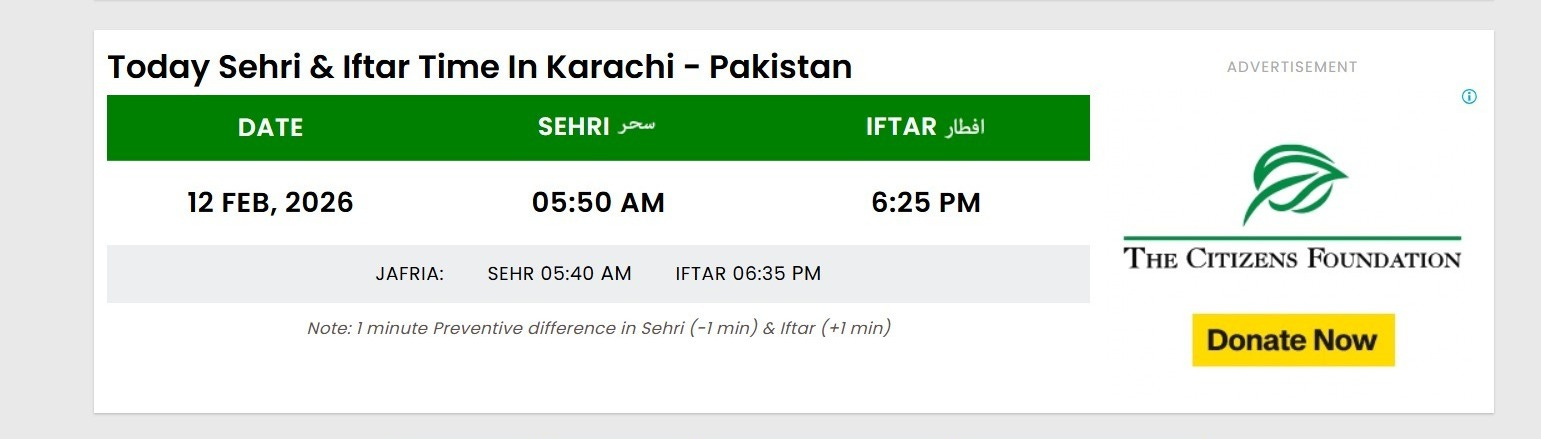
During Ramzan, Hamariweb is the most-visited site in the world for people searching for sehri and iftar timings. It’s not a media buy people think of first. But it is exactly where a Pakistani diaspora donor, sitting in New York, checking when to break fast, is going to look. We placed TCF adverts directly into those timing pages, globally. That meant, anyone searching for sehri or iftar timings globally would be shown a TCF advert.
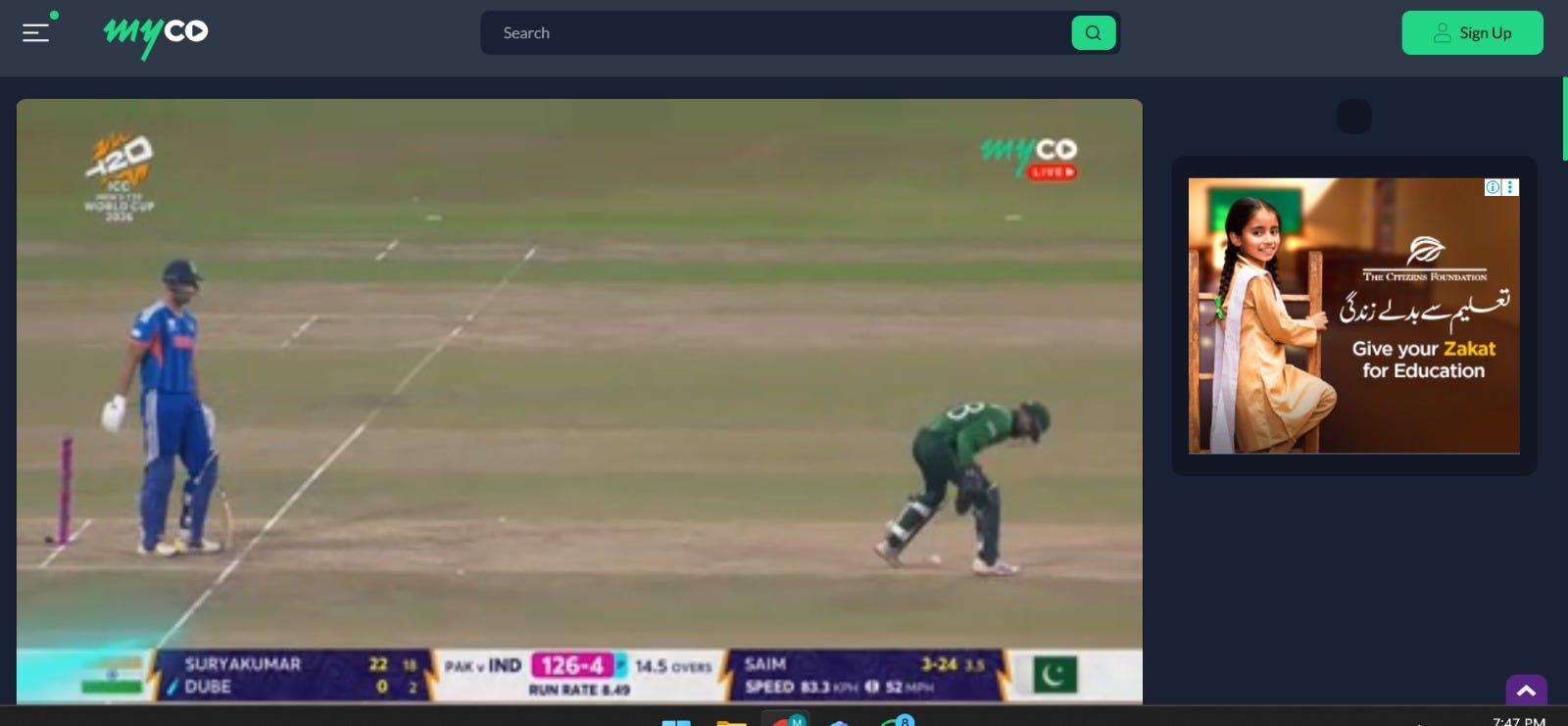
We also ran placements on ARY News and Dawn News during sehri and iftar windows, targeting Pakistani diaspora across North America, the UK, and the GCC. The T20 Cricket World Cup was running concurrently, and we used Tapmad and Myco broadcasting platforms to capture high-volume attention during matches. Cricket in Pakistan is a gathering of the same people you are trying to reach.
The principle behind all of it: don’t try to be present on every surface. Be present on the surfaces your audience treats as essential, at the moments they are most themselves.
Peer to peer is a primary engine, not a footnote
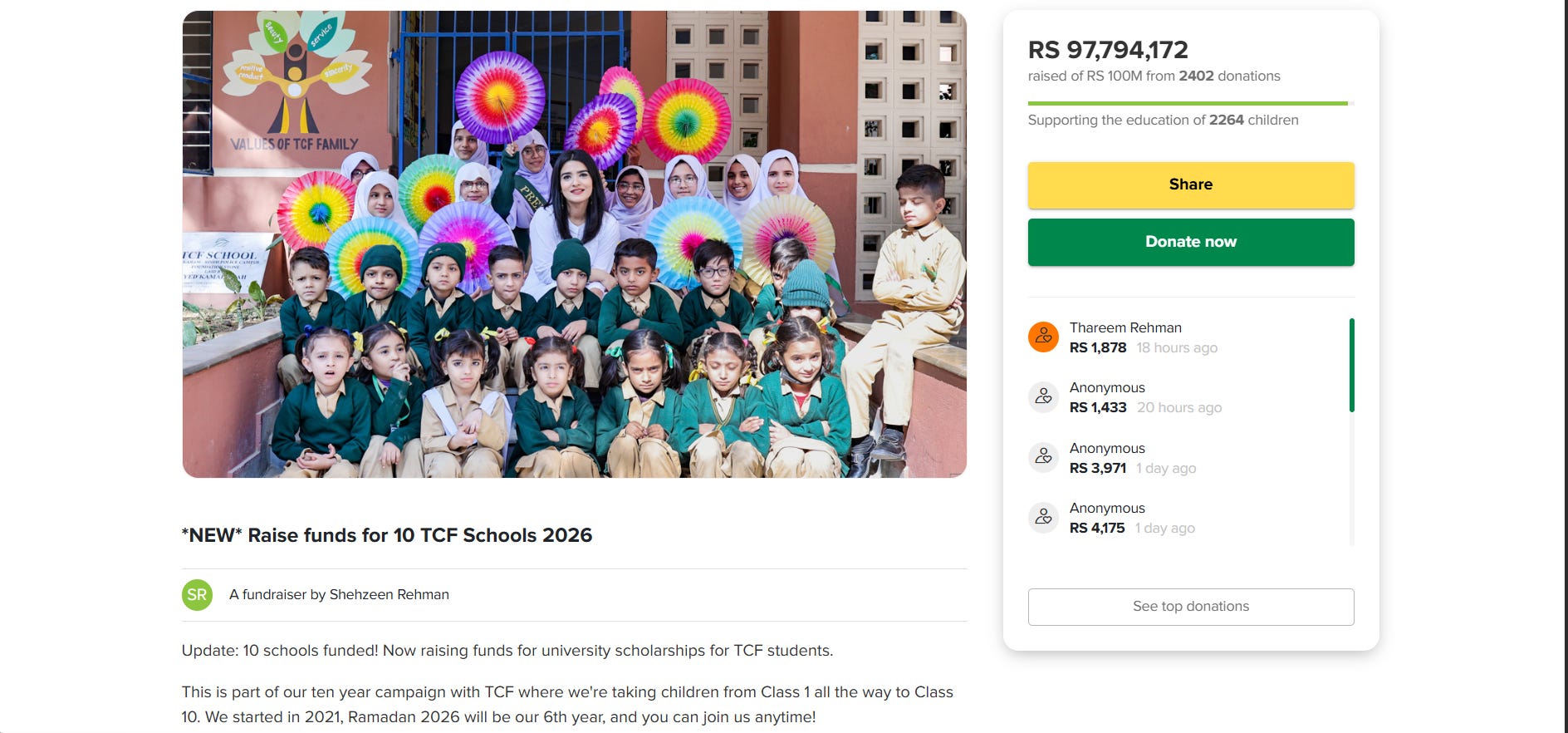
Community fundraising grew +41% online year over year. 295 new fundraisers were created between February and April where 356 individuals ran active campaigns. Total P2P value crossed multiple millions in $ terms.
The reason peer-to-peer works at scale during Ramzan is the same reason it works anywhere: people give to people, not to organisations. When someone you know is fundraising for a cause they believe in, the trust is already established. The ask doesn’t need to overcome scepticism. It just needs to be made.
What makes P2P effective operationally is that the fundraisers market their own campaigns. They share, they follow up, they create urgency within their own networks. The organisation’s job is to build the infrastructure and get out of the way. Our P2P portal gave fundraisers the tools and the dignity to run their own campaigns.
Branded search is not optional during Ramzan
When Ramzan arrives, people who have heard of you search for you. They type your name into Google and intend to give. If you are not there to capture that search, someone else will absorb the attention instead.
We saw branded and unbranded search deliver the same number of conversions, but the average gift on branded search was five times higher. The person who searches by name has already decided. They don’t need persuading. They need a frictionless path to the donation page.
Never underfund branded search during Ramzan. The ROAS on it, when built upstream by strong creative and brand presence, is the highest of any channel. Search is the harvest and everything else is the field.
One person. No noise.
The entire global paid engine this Ramzan, reporting, campaign setup, creative enablement, channel strategy, weekly refreshes, ran with one person at the helm.
Bloated teams in fundraising often create the illusion of output. What actually produces results is clarity about what matters, the discipline to ignore what doesn’t, and the willingness to be inside the numbers at all times. During Ramzan, the numbers were always on screen. We knew which creative was dying before it was officially dead. We knew which market was pulling ahead before the weekly report was due.
The noise during Ramzan is enormous. Every platform, every agency, every fundraiser is shouting. The answer is not to shout louder, but to know exactly what you’re listening for.
The retail donor is the most underestimated force in giving
People are giving online and they have been giving online. But fundraising has been slow to treat them the way e-commerce treats its customers with precision segmentation, creative personalisation, journey optimisation, and relentless attention to conversion.
For example, Fitrana, the smaller Ramzan obligation typically given as a few hundred rupees, is not a category most digital campaigns bother to build for. We built for it and it worked. This showcases a paradigm shift where donors are increasingly comfortable with taking their transactions online.
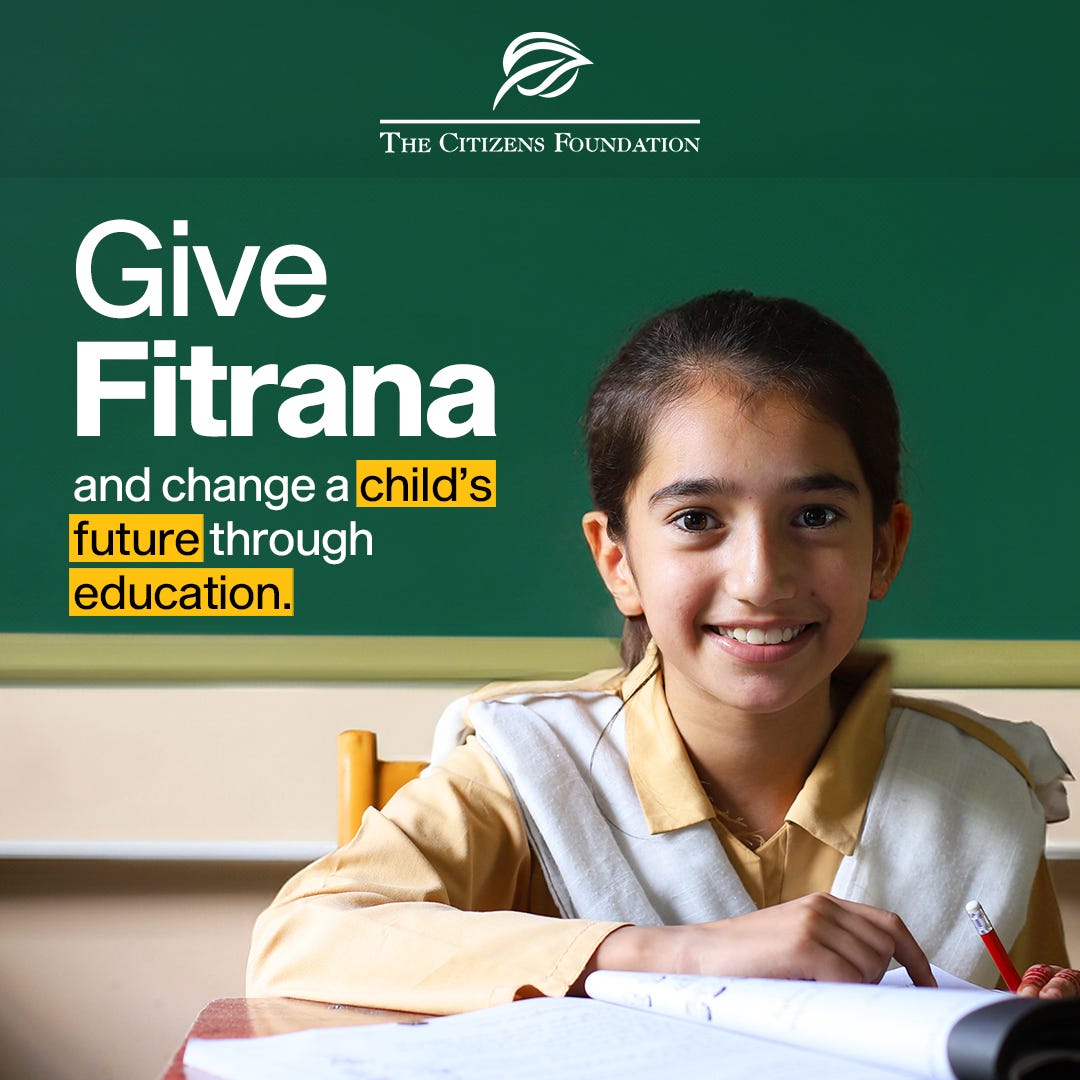
The same digital infrastructure that captured a $50,000 single gift in the US captured a first-time Fitrana donation in Pakistan. That range is the future of this sector. The ceiling, when you build properly, is not where most people think it is.
Ramzan ends. The laptop eventually closes. But the decisions made in January, the creative built in February, the trust earned long before the first iftar; those are what show up in the numbers by the 24th of March.
Build early. Build trust. Build creative that knows who it’s talking to. And then be where your audience already is, at the exact moment they are ready to give.
The market is there and it has been there for a while. It’s just waiting to be treated with the same seriousness that retail has always given it.
-Moebin